


Lucky Melody - Earn Money
4.317.00 Reviews
App Specs
- Version
- 1.0.1
- Updated On
- License
- Free
- Downloads
- 100,000+
- Developer
- Jude Ncusu
- Categories
- Music & Audio
- Platform
- Android
Screenshots
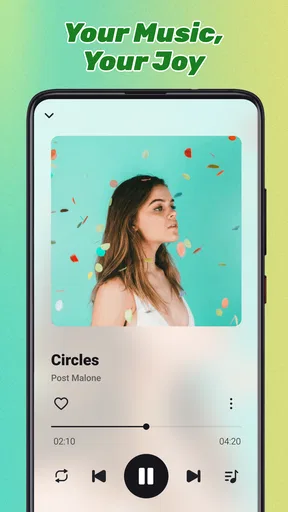
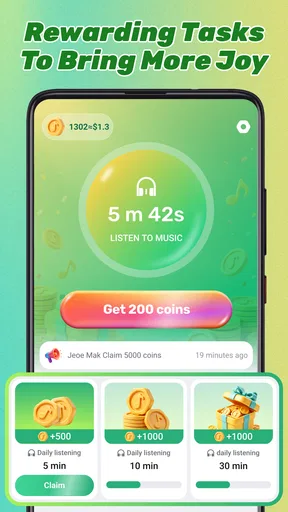
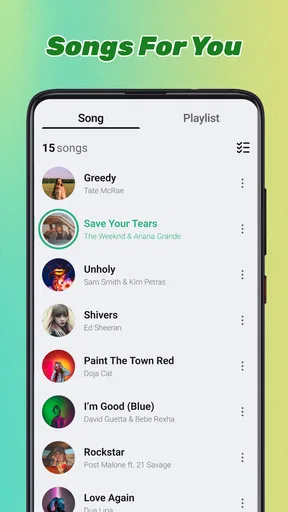
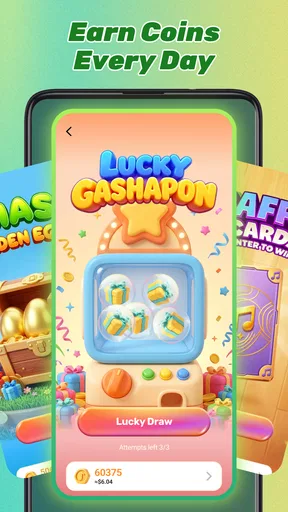
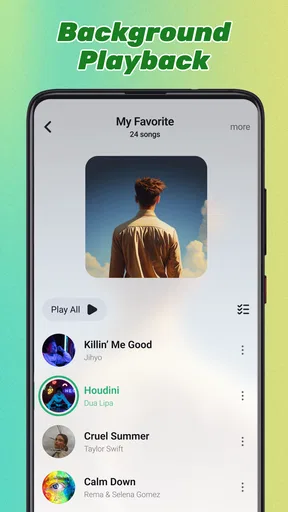
 Analysis by AppCompare
I approached Lucky Melody - Earn Money as a music and audio app rather than as a conventional streaming giant. Its central appeal is simple: it is designed to let you carry music with you and listen with fewer limits, while its unusual name suggests that earning money is part of the experience users may be curious about. After spending time looking at how it fits into everyday listening, my impression is that it is best treated as a lightweight option for people who want to explore a different music app without paying an entry fee.
The app is free, aimed at Everyone, and comes from developer Jude Ncusu. It has reached over one hundred thousand installs and holds a 4.2 average from nearly four hundred ratings, which gives it a meaningful user base without putting it in the same league as the biggest names in music. That distinction matters. I would not install it expecting the depth, polish, or enormous ecosystem of a long-established service. I would install it if I wanted a straightforward music companion and was willing to spend a little time learning where it fits into my routine.
How Lucky Melody feels in its current state
The most important thing to understand is that the app’s promise is broader than a single listening feature. The store summary presents it as a way to take music anywhere and listen without limits, while the short description identifies it as “Lucky Melody.” In practice, that positioning makes it sound more flexible than a basic local audio player, but less clearly defined than a full subscription platform. My advice is to approach it with practical expectations: use it for convenient listening and discovery, then decide whether its particular approach suits you.
That uncertainty is not automatically a weakness. Smaller music apps can sometimes feel less overwhelming than services packed with podcasts, social feeds, editorial playlists, smart speakers, and several subscription tiers. If you mainly want to open an app and spend time with music, a leaner experience can be attractive. The trade-off is that the details that make major services dependable—deep catalog organization, mature recommendations, seamless device switching, and carefully documented offline behavior—are usually the very areas where a newer or smaller product has more to prove.
I also see the “earn money” wording as something that deserves careful attention rather than instant enthusiasm. A name can create expectations about rewards, but a responsible user should not assume that listening alone guarantees income. Treat any earning-related element as a possible bonus, not as a replacement for work or a dependable financial service. Before investing serious time, I would read every in-app explanation closely and check what actions are actually required.
A sensible first session
My preferred way to test an app like this is not to judge it after opening it once. I would begin with a short listening session, search for a few familiar artists or tracks, and then try the same process on a different network. That reveals more than a polished first screen. I would also check whether the app remembers my place, whether controls remain easy to reach when the phone is locked, and whether moving between tracks feels predictable.
For someone commuting, studying, or doing household work, these small details matter more than a flashy introduction. A music app earns a place on my phone when it reduces friction: I can find something suitable quickly, start playback, and return later without rebuilding the same session. If Lucky Melody handles those basics comfortably on your device, its free price becomes a genuine advantage.
Worth Reading Before You Choose

Switching to Android Auto Means Rethinking Your Driving Routine

Google Calendar Makes a Crowded Week Easier to Manage

Baby Panda World Brings Quick Play to Modern Phones, but Its Game Library Feels Busy

ESPN’s Live Game View Makes Following Close Games Easier

QuizzLand Review: A Good Fit for Short Trivia Breaks, Not Every Player

Basketball Stars: Multiplayer Is Fast, but Can It Recover When Matches Go Wrong?
What the current release tells me
The current version is 1.0.1, and that number gives the app a particular character. It feels like a product that is still establishing its shape rather than a mature platform with years of visible refinement. The release date is June 18, 2026, so the most useful way to evaluate it is as a relatively early offering. I would pay attention to how consistently it behaves across ordinary sessions instead of assuming that every part of the experience has already been perfected.
That early-stage position can work in the app’s favor. A smaller product may be easier to understand, and early users can sometimes benefit when developers respond quickly to practical feedback. Jude Ncusu has room to clarify the app’s identity and make the listening journey more coherent. At the same time, early adoption asks users to tolerate a little uncertainty. If you need a music service that has already solved every edge case, a more established alternative is the safer choice.
The version number also gives existing users a useful reference point. If you have used an earlier build, compare the current release by looking for changes in stability, playback continuity, navigation, and the visibility of any earning-related functions. Those are the areas where an update can change the daily experience even when the app’s basic purpose remains the same. I would not assume that a newer version automatically means a complete redesign; I would judge it by whether common tasks feel easier.
What it means for different listeners
I’d use this section to think through how Lucky Melody might fit different listening habits, from someone casually playing music at home to a household sharing one device. The key question is not simply whether it works for one person, but whether its role stays clear when several people have different expectations. That leads naturally to the boundaries worth agreeing on before anyone else starts using it.
For casual listening
Lucky Melody makes the most sense for a casual listener who wants a free music app and does not need an elaborate media ecosystem. Imagine a person preparing dinner after work. They want background music, do not want to commit to a subscription, and are happy to browse for a while before settling on something. In that situation, a lightweight app can be enough, especially if the phone is already the main listening device.
The same applies to short walks, quiet study sessions, and simple household routines. I would keep the app in this role rather than making it the only place I listen until I have tested it over several days. A useful habit is to prepare a small set of preferred listening choices before leaving home, particularly if mobile data is limited or the app’s behavior outside a strong connection is important to you.
For users attracted by rewards
The earning angle will naturally attract a different audience. If that is your main reason for installing the app, slow down before assuming the title tells the whole story. Look for clear explanations of eligibility, how progress is counted, whether rewards require additional actions, and how any redemption process works. I would also avoid sharing sensitive information until I understood exactly why it was needed and whether the request made sense for the feature being used.
This is one of the app’s biggest judgment calls. A person who already enjoys music may be pleased to discover an extra incentive, but someone focused entirely on making money may become frustrated if the listening experience is secondary to tasks, waiting, or account management. In my view, the app is a better fit for listeners who would use it anyway. The possible reward should complement the music experience, not define your financial expectations.
For families and younger listeners
The Everyone content rating makes the app broadly approachable, but that label should not replace ordinary parental judgment. If a child uses it, I would still check the available content, the way searches work, and whether any reward-oriented prompts encourage unnecessary interaction. A general age rating tells me the app is intended for a wide audience; it does not mean every listening choice will match every family’s preferences.
For adults sharing a phone with children, a practical approach is to keep account and payment decisions under adult control and to explain that any in-app earning claim is not free money. This is especially important when an app’s name makes rewards part of its identity. The music side may be harmless and enjoyable, but expectations should remain realistic.
Where it differs from familiar alternatives
Compared with a major subscription streaming service, Lucky Melody’s strongest advantage is the absence of an entry cost. You can try it without first deciding whether a monthly plan is worthwhile. That makes it useful for occasional listeners, people testing a second music app, or anyone who wants to keep entertainment spending at zero.
The established services, however, are usually better when you want a highly predictable catalog, polished recommendations, synchronized listening across several devices, or a mature offline workflow. They also tend to explain their plans and controls more clearly because those systems have been refined over time. If your day depends on reliable music during travel, work, or exercise, I would compare both options directly instead of switching completely on the first impression.
Compared with a local music player, the choice is different again. A local player is ideal when you already own organized audio files and want maximum control over folders, storage, and playback without depending on an online service. Lucky Melody is more appealing when you want an app built around discovering or accessing music rather than managing your own collection. The right option depends on whether your music already lives on your phone.
There is also a difference from radio-style apps. Radio is convenient when you want someone else to choose the flow, while a more interactive music app suits listeners who want to search and make decisions. If you dislike browsing and simply want uninterrupted background sound, a familiar radio option may feel more relaxing. If you enjoy exploring, Lucky Melody has a clearer reason to stay installed.
Practical habits that make the trial more useful
My first tip is to test the app at three different moments: at home on a stable connection, outside on mobile data, and during a longer uninterrupted session. This is more revealing than checking whether a single song starts. Notice how quickly the app recovers after a connection change, whether returning from another app interrupts playback, and whether your place is preserved after closing it. These are the small tests that tell you whether an app belongs in a daily routine.
My second tip is to separate listening value from reward value. For a few days, use Lucky Melody as though the earning language were not present. Ask whether you would still enjoy the search, playback, and general flow. Then examine any reward-related area with a skeptical eye. This two-stage test prevents a tempting promise from hiding an experience you would not otherwise choose.
My third tip is to monitor battery and data behavior during normal use. I would not make a judgment from one short session, because screen brightness, signal strength, and other apps can distort the result. Instead, compare a similar listening period on another day and note whether the phone becomes unusually warm or whether your data usage changes more than expected. If your plan is limited, prepare accordingly and avoid treating “listen anywhere” as permission to stream without checking your own limits.
A fourth useful habit is to keep your expectations proportional to the version. With 1.0.1, I would report specific friction rather than writing the app off after one awkward screen. If playback fails, note what you were doing immediately beforehand. If navigation feels confusing, record the exact path that caused the problem. This makes feedback more valuable and helps you decide whether a later update has genuinely improved the product.
Remaining gaps and who should skip it
The largest gap is clarity. The app’s identity combines music listening with an earning suggestion, but those two ideas can pull users in different directions. I want a clear understanding of what the primary experience is before I invest time. If the music tools are strong and the reward element is optional, that is a comfortable arrangement. If the reward path dominates the interface, listeners looking for calm background music may find it distracting.
I would also hesitate to recommend it as the sole app for someone who needs professional reliability. DJs, performers, frequent travelers, and people who depend on a carefully organized offline collection should choose a service with a proven workflow for their specific needs. The same applies to listeners who expect advanced library management, extensive device integration, or a deep history of updates. Lucky Melody’s current position makes it more suitable as an experiment or secondary option.
People who dislike evaluating new apps should probably skip it too. The free price removes financial risk, but it does not remove the cost of time. You may need to explore the interface, understand the listening model, and decide whether the earning language is relevant to you. If you prefer an app whose purpose, controls, and ecosystem are immediately familiar, a mainstream alternative will likely feel more comfortable.
Privacy-conscious users should follow the same rule I use with any unfamiliar app: grant only the access that is necessary for the feature I am actively using, and read prompts instead of accepting them automatically. I would be particularly careful around anything connected with rewards, identity, or withdrawals. That is not a criticism unique to this app; it is a sensible boundary whenever entertainment and money-related expectations appear together.
What I would watch as the app develops
For future releases, I would watch whether Jude Ncusu makes the product’s purpose clearer and whether everyday playback becomes more dependable. The most meaningful progress would not necessarily be a dramatic visual redesign. I would value improvements that help users find music faster, understand what they are doing, return to previous listening, and distinguish ordinary music use from any reward activity.
I would also look for a steady pattern of maintenance. An early release can become much more convincing when updates address real friction instead of simply adding more prompts. Existing users should compare each new version against their own routine: does it start more reliably, recover better, use the interface more clearly, and make the app easier to recommend? Those answers matter more than the version label by itself.
My final view is cautiously positive. Lucky Melody - Earn Money is worth trying if you want a free music and audio app, enjoy testing alternatives, and can treat the earning idea as something to investigate rather than a promise of income. Its broad age rating and growing install base make it approachable, while its current early-stage identity means I would keep a second option available until it proves itself in your daily listening.
I would recommend it to a friend who wants a no-cost experiment for casual music sessions. I would not recommend replacing a dependable primary service immediately, especially if offline access, a huge catalog, or advanced library control is essential. The fairest conclusion is that this is an app to explore with clear expectations: judge the music experience first, examine reward claims carefully, and let repeated real-world use—not the name alone—decide whether it earns a permanent place on your phone.
Pros
- Simple interface makes the app easy to navigate for new users.
- Multiple earning activities provide variety beyond a single task type.
- Low storage requirements make it suitable for many Android devices.
- Reward progress can motivate users to return and complete more activities.
- The app may offer flexible ways to spend short periods of free time.
Cons
- Earnings are likely to be small and should not be treated as regular income.
- Some rewards may require significant time or repeated task completion.
- Availability of tasks and offers can vary by location and account.
- Ads may interrupt navigation and reduce the overall user experience.
- Withdrawal rules
- minimum thresholds
- and processing times may limit payouts.
FAQs for Lucky Melody - Earn Money
What is Lucky Melody - Earn Money, and how does it work?
Lucky Melody - Earn Money is an entertainment and rewards app that presents users with music-related activities, casual tasks, offers, or in-app events that may provide points or virtual rewards. After collecting enough rewards, users may be able to request a withdrawal through the payment methods supported in their region. The exact activities, earning rates, and redemption rules can change, so review the current terms inside the app before spending significant time.
Can you really earn money with Lucky Melody - Earn Money?
The app may offer opportunities to earn rewards, but it should not be treated as a guaranteed income source. Earnings are usually dependent on completing available activities, watching advertisements, meeting minimum requirements, and the availability of campaigns in your country. In practice, rewards can be modest and may take time to accumulate. Always consider the app a casual rewards platform rather than a reliable job or financial service.
How do withdrawals work, and what is the minimum payout?
Withdrawal procedures and minimum payout thresholds may vary according to your location, account status, and the payment services connected to Lucky Melody - Earn Money. Before using the app extensively, open the wallet, rewards, or cash-out section to confirm the available options, processing times, and eligibility conditions. Some requests may require identity or account verification, and rewards can be delayed, rejected, or limited if the app detects unusual activity.
Is Lucky Melody - Earn Money safe to use on Android or iPhone?
The app should be downloaded only from a legitimate Google Play or Apple App Store listing, rather than from unofficial APK websites or unknown links. Before installing, check the developer name, recent reviews, permissions, privacy policy, and update history. Avoid sharing sensitive information such as banking passwords, card PINs, or unnecessary identity documents. As with any rewards app, use a separate account where possible and monitor permissions after installation.
Are there any important limitations or disadvantages to know before downloading?
Users should expect advertising, possible regional restrictions, changing reward availability, and a relatively slow earning process. Some activities may require watching several ads or completing promotional offers, while the advertised reward may not be available to every user. Internet access is generally necessary, and the app’s payout rules can change over time. Read the terms carefully, check recent user feedback, and never pay money simply to unlock a withdrawal.


